
The Supreme Court has directed an appellate tribunal to expeditiously decide an appeal filed by a 75-year-old advocate challenging the deletion of his name from the West Bengal voters' list following a Special Intensive Revision exercise. The court noted the petitioner appeared to be a bona fide resident and requested a decision within two months.

West Bengal Chief Minister Mamata Banerjee has accused the BJP of deleting over 9 million names from voter lists in an attempt to win the upcoming Assembly elections. She vowed to fight the alleged manipulation legally and politically.
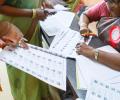
The Election Commission has announced a Special Summary Revision of electoral rolls in 17 states and Union territories, including those facing assembly polls next year. This initiative aims to enrol new voters, correct existing entries, and enhance the accuracy of voter lists, with January 1, 2027, set as the qualifying date.

The Bombay High Court's Goa bench has ruled that draft electoral rolls cannot be the sole basis for deleting names from voter lists, asserting that administrative software cannot supersede statutory laws. The court questioned the Election Commission of India's authority to delete voters without a hearing, highlighting concerns over the ERONET system's limitations and its potential to disenfranchise citizens.

Actor Prakash Raj has claimed his name was deleted from Bengaluru's electoral rolls during the Special Intensive Revision process, affecting 6.5 million voters. He expressed frustration and questioned the ruling dispensation, while reports indicate his name was marked as "permanently shifted" due to a previous case involving multiple voter IDs.

Despite numerous appeals, only two names have been restored to the West Bengal electoral rolls after 2.7 million deletions, raising concerns about voter access and the functionality of proposed tribunals.
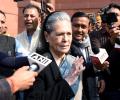
Senior Congress leader Sonia Gandhi has filed a reply in a legal matter concerning her inclusion in the voter list, which is alleged to have occurred before she became an Indian citizen. The case, initiated by Advocate Vikas Tripathi, seeks the registration of an FIR against Gandhi and is currently pending before a sessions court.

According to data released by the ECI, the revised electoral roll has 2,69,53,644 voters, compared to 2,78,50,855 before the Special Intensive Revision began in October last year.

Police in West Bengal have arrested 17 people, including an Indian Secular Front (ISF) candidate, in connection with the alleged confinement of judicial officials during a protest over voter list deletions in Malda district.

A political controversy has erupted over the inclusion of BJP Rajya Sabha MP Raghav Chadha's name in Delhi's electoral rolls. The Aam Aadmi Party (AAP) has alleged procedural irregularities, questioning how his name appeared in the Rajinder Nagar constituency's voter list despite the draft rolls showing fewer entries. Poll officials confirm Chadha's name was added through the updation process after being removed from Punjab's rolls, while Chadha dismisses AAP's claims as a 'bitter ex' reaction.

West Bengal Chief Minister Mamata Banerjee accused the BJP of 'linguistic terror' and plotting to delete Bengali voters from electoral rolls, vowing to protect voting rights.
West Bengal Chief Minister Mamata Banerjee has urged voters to cast their ballots in the upcoming assembly polls as a form of 'revenge' for the deletion of names from electoral rolls, alleging foul play and urging vigilance during the election process.

The Election Commission reports a significant reduction in West Bengal's electoral rolls following a Special Intensive Revision, with nearly 9.1 million voters deleted.

Police in Bengaluru have registered a case against two Booth Level Agents (BLAs) and others for allegedly submitting fraudulent Form 7 applications to delete 5,698 voters from the electoral rolls in the Jayanagar Assembly constituency. The complaint, filed by Karnataka Mahila Congress president Sowmya Reddy, claims the BLAs are affiliated with the BJP and targeted minority communities and politically unfavourable voters.

The Supreme Court has directed the establishment of independent appellate tribunals, led by former high court judges, to address appeals related to voter list exclusions in West Bengal, while also cautioning against undermining judicial officers involved in the process.
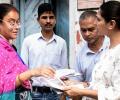
The Election Commission is yet to disclose the number of voters whose names have been included or deleted following the SIR adjudication process in poll-bound West Bengal.

'I am alive, I have not died. Look, I am standing and speaking,' says Imarti Devi who is listed as deceased and whose name has been deleted from the voter's list. M I Khan reports from Dharaichak, a village in Bihar where 200 voters have been removed from the voter's list.
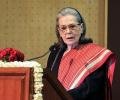
A Delhi court has revived a legal challenge concerning Congress leader Sonia Gandhi's electoral roll inclusion, quashing a magistrate's previous order and mandating a fresh, reasoned hearing on allegations of pre-citizenship voter registration.
The Supreme Court has declined to intervene in a petition concerning the deletion of names from voter lists in West Bengal, directing the petitioners to seek redressal through established appellate tribunals.

A panel of retired Supreme Court and High Court judges, part of an Independent Commission on Special Intensive Revision (SIR), held a public hearing on Thursday to address widespread deletions from India's electoral rolls. Testimonies from affected citizens, including a former MP and a Delhi resident declared deceased by the Election Commission, highlighted significant issues. The SIR process, initiated in 2025, has led to the removal of approximately 13 crore voters nationwide, with substantial deletions reported in Delhi and Uttar Pradesh.

The Election Commission of India has introduced new restrictions on the number of Form 7 applications an individual can submit, both online and offline. This move aims to prevent bulk or malicious attempts to remove legitimate voters from electoral rolls and streamline the objection process, especially after reports from states like Karnataka and Odisha.
West Bengal Chief Minister Mamata Banerjee has urged voters to 'take revenge' for the deletion of names from electoral rolls, alleging the BJP is behind the changes. She also addressed concerns about EVM tampering and the deployment of officers to other states.

The Election Commission of India has published the final voters list for Assam after a Special Revision, deleting over 2.43 lakh names from the draft roll. The final roll comprises nearly 2.49 crore voters, a decrease of 0.97 per cent from the draft roll.
Odisha's Chief Electoral Officer has ordered a thorough verification of nearly 1 million voter deletions following complaints of wrongful removals, particularly concerning deceased voters and those who may have shifted residences.
West Bengal Chief Minister Mamata Banerjee has demanded Prime Minister Narendra Modi's resignation, alleging manipulation of voter lists during the Special Intensive Revision (SIR) in West Bengal. She also questioned the abrupt resignation of Governor C V Ananda Bose and accused the BJP of anti-women policies and spreading misinformation.
The Election Commission has launched a special drive to include eligible citizens who were omitted or deleted during the recent Special Investigative Review (SIR) exercise, as well as to register new and young voters. This initiative follows accusations from opposition parties regarding disenfranchisement and aims to ensure no eligible citizen is left out of the electoral process.

Union Home Minister Amit Shah accuses the West Bengal government of openly facilitating infiltration, defends the Special Intensive Revision of voter lists, and asserts BJP's prospects in upcoming elections.

Chief Election Commissioner Gyanesh Kumar expressed satisfaction over the completion of the Special Intensive Revision (SIR) in Bihar, stating that the exercise has 'purified' the voters' list after 22 years. He made the announcement during a press conference in Patna.

A report by 'Voter Adhikar Manch' has revealed that the number of excluded electors in Delhi's draft electoral roll under the Special Intensive Revision (SIR) exceeded the winning margin in 68 of 70 Assembly constituencies in the 2025 polls. The audit found over 47 lakh electors marked as absent, shifted, dead, or duplicate, raising serious questions about the integrity of the electoral process and the accuracy of voter lists.

Goa Forward Party chief Vijai Sardesai has alleged that Nepalese nationals were added to the state's electoral rolls during the Special Intensive Revision (SIR) and that voters were illegally shifted between constituencies. He has demanded an impartial investigation into these alleged irregularities, calling for deletion of illegal entries and action against those responsible.
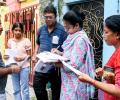
The Supreme Court has directed the Election Commission to provide details on the disposal of appeals by tribunals concerning deletions from West Bengal's electoral rolls during the Special Intensive Revision (SIR). The court emphasised the need to track the progress of these appeals, which were set up to address irregularities. It also clarified that grievances regarding the denial of PDS benefits due to voter deletion should be taken up with the Calcutta High Court.
Former RBI Governor Bimal Jalan, ex-IAF Chief NAK Browne, and other prominent figures in Delhi have received notices regarding discrepancies in their voter details during the ongoing Special Summary Revision (SIR) of the electoral rolls. Over 33 lakh electors have been identified for such notices, with a deadline of September 30 for responses.
A PIL has been filed in the Supreme Court seeking a detailed constituency-wise disclosure of disenfranchisement caused by the Special Intensive Revision (SIR) of electoral rolls in West Bengal.

'93 lakhs deletions in Bengal, 96 lakhs in Tamil Nadu, 24 lakhs in Kerala, 77 lakhs in Gujarat, 45 lakhs in Madhya Pradesh, 44 lakhs in Rajasthan. 2.89 crores in Uttar Pradesh. Nearly 3 crores!'

The Delhi Chief Electoral Officer's office has issued notices to over 33 lakh voters, including former deputy prime minister LK Advani, External Affairs Minister S Jaishankar, and former vice-president Jagdeep Dhankhar, over discrepancies in their electoral roll details. These notices are part of the Special Intensive Revision (SIR) exercise, primarily due to details not matching with the 2002 SIR. Despite concerns raised by some politicians, officials assure that no names will be deleted without due verification and an opportunity for voters to respond.

The Supreme Court has expressed concern to the Election Commission regarding the "almost mechanical" issuance of notices under the Special Intensive Revision (SIR) exercise in Delhi, urging additional safeguards and clarification on "logical discrepancy" criteria. The court is hearing a petition challenging the EC's process, which has seen millions of voters receive notices, raising practical difficulties and concerns about potential disenfranchisement.

The Election Commission's Special Intensive Revision (SIR) of electoral rolls has completed one year, leading to the deletion of nearly six crore voters across 19 states and Union territories. This exercise, which began in Bihar, has faced opposition criticism but was upheld by the Supreme Court. The purification drive has significant implications, including linking voter data to social security benefits in some states.
The Supreme Court will hear a plea on October 28 regarding the Special Intensive Revision (SIR) of Delhi's electoral roll. Petitioners seek transparency from the Election Commission on voter deletion reasons and a simplified re-inclusion process for those omitted, especially concerning Form 6. The court had previously raised concerns about "mechanical" notice issuance during the SIR, which led to 47 lakh voter deletions in Delhi.
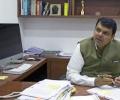
Maharashtra Chief Minister Devendra Fadnavis has accused the TMC of conspiring to include infiltrators in electoral rolls, claiming the party objects to the Special Intensive Revision (SIR) while those rightfully removed from the rolls did not protest.

India's Election Commission's centralised voter database systems, ERONET and ECINet, are under scrutiny following concerns raised by Election Commissioners Sukhbir Singh Sandhu and Vivek Joshi regarding the centralisation of electoral rolls and control available to state election officials. The article explains how these systems work and why they are currently in the news.
